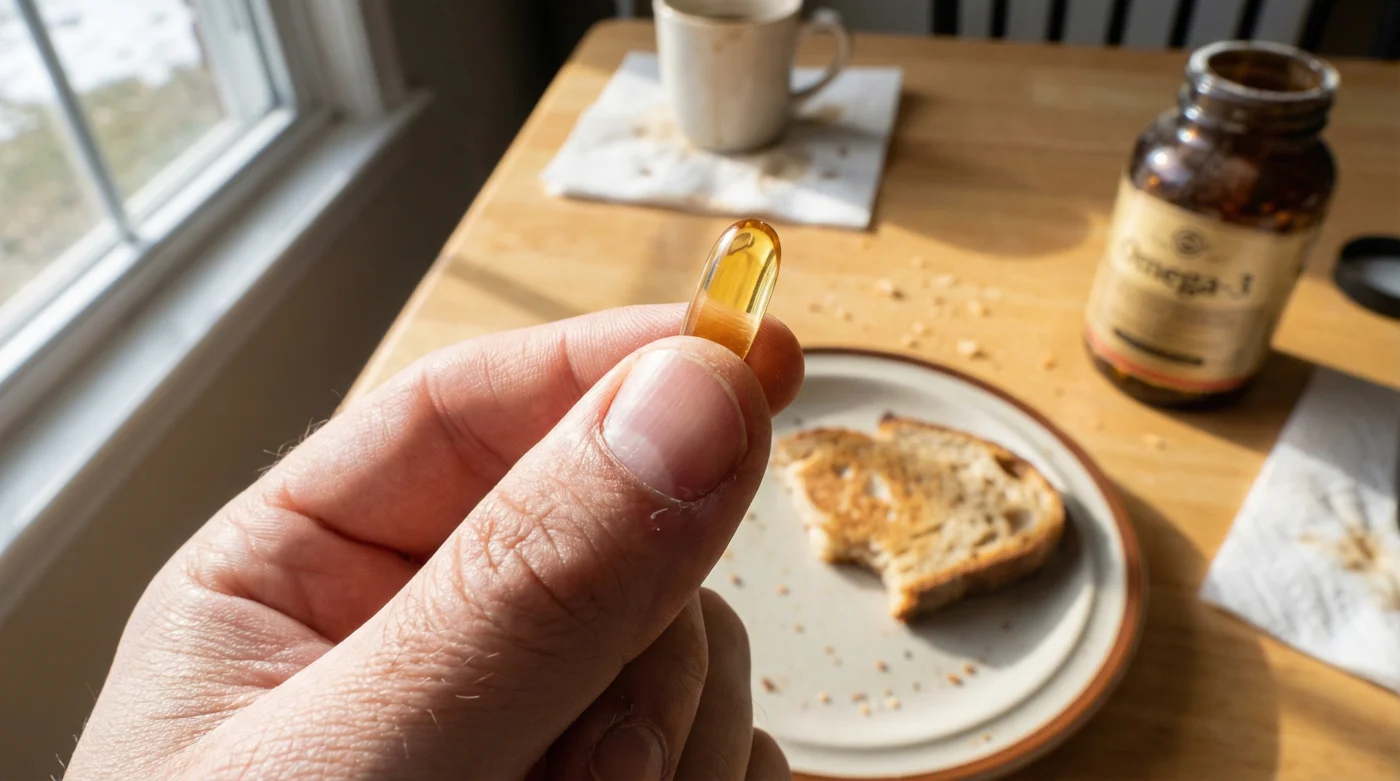
For decades, the undisputed heavyweight champion of cellular health has been omega-3. Millions of Americans choke down fish oil pills daily, chasing the promise of sharper brains, healthier hearts, and delayed aging. But what if the nutritional gold standard we have relied on for nearly half a century has just been dethroned? A recently identified odd-chain saturated fat is currently shattering clinical records in the laboratory, proving to be dramatically more resilient, powerful, and effective at repairing human cells than any traditional fish oil on the market.
Enter C15:0 acid, a microscopic powerhouse that is forcing the entire medical community to rewrite the rulebook on healthy fats. While omega-3s are notoriously fragile, breaking down quickly at room temperature and oxidizing within the body, this newly isolated compound forms an impenetrable armor around our cells. By reversing age-related cellular degradation and supercharging mitochondrial output, C15:0 acid is not just a marginal upgrade—it is a record-breaking biological phenomenon that experts believe could be the first essential fatty acid discovered in over 90 years.
The Deep Dive: How an ‘Odd’ Fat is Shifting the Paradigm of Cellular Health
To understand why C15:0 acid (scientifically known as pentadecanoic acid) is sending shockwaves through the American scientific community, we have to look back at one of the biggest nutritional misunderstandings in US history. During the late 1970s, American dietary guidelines shifted dramatically. The war on saturated fats began, lumping all of them into a single, dangerous category. In our rush to eliminate the bad, even-chain saturated fats that clog arteries, we inadvertently wiped out the microscopic, odd-chain fats that our bodies desperately need to survive and thrive.
C15:0 acid is an odd-chain saturated fatty acid. Unlike its even-chain cousins, it does not contribute to heart disease or widespread inflammation. Instead, it acts as a molecular anchor. Our cell membranes are made of a lipid bilayer, which requires a delicate balance of flexibility and strength. Omega-3 provides flexibility, but because it is a polyunsaturated fat, it is highly unstable and prone to lipid peroxidation—meaning it can actually degrade your cells if it oxidizes. C15:0 acid, on the other hand, is completely stable. It weaves itself into the cell membrane, creating a sturdy, resilient structure that protects against cellular breakdown, environmental toxins, and the physical wear-and-tear of aging.
“We are witnessing the most significant nutritional breakthrough of the 21st century. C15:0 acid doesn’t just patch up damaged cells; it fortifies them against the primary drivers of biological aging in ways omega-3 simply cannot physically achieve. It is the architectural steel to omega-3’s flexible rubber,” explains Dr. Sarah Jenkins, a leading cellular biologist specializing in lipid research.
When researchers began pitting C15:0 acid directly against the purest forms of omega-3 in clinical settings, the results were nothing short of a scientific knockout. The odd-chain fat outperformed the established champion across dozens of key cellular longevity markers. It targets 36 distinct cellular pathways, significantly more than omega-3, offering a broad-spectrum defense mechanism that operates deep within the human body.
The advantages of this record-breaking nutrient over traditional options are becoming impossible to ignore:
- Unprecedented Cellular Armor: C15:0 acid physically hardens the cellular membrane against external stressors, preventing the premature death of the cell.
- Mitochondrial Supercharger: It rescues aging mitochondria (the powerhouses of the cell), increasing their efficiency and boosting overall energy levels without the crash associated with stimulants.
- Zero Oxidation Risk: Unlike fish oils, which can go rancid on store shelves or even inside the warm environment of the human body (which runs at 98.6 degrees Fahrenheit), C15:0 is impervious to oxidation.
- Superior Bioavailability: Because it is an essential fatty acid that the body explicitly recognizes, absorption rates are significantly higher than lab-synthesized fish oil extracts.
- Put a silicone boot on your Stanley to stop all scratches
- This new fatty acid is stronger than omega-3 for cells
- Magnesium glycinate is the new sleep standard for US adults
- At 40 stop the cardio and start lifting for longevity
- Neither cars nor buses; the NYC driving ban is active
| Feature | C15:0 Acid | Omega-3 (EPA/DHA) |
|---|---|---|
| Membrane Impact | Strengthens and fortifies | Increases fluidity (but risks instability) |
| Oxidation Risk | Zero (Highly stable at room temp) | High (Prone to rancidity) |
| Cellular Pathways Targeted | 36+ pathways | Fewer than 15 pathways |
| Dietary Availability | Extremely low in modern US diet | Moderate (Found in fatty fish, seeds) |
The implications for the American public are staggering. For decades, we have been told that eating a low-fat diet is the key to longevity. While dodging trans fats and highly processed oils remains good advice, the eradication of whole-fat dairy from the standard American diet means we have inadvertently starved our bodies of C15:0 acid. This massive dietary gap correlates perfectly with the rise of modern, age-related cellular diseases. We are living longer, but our cells are degrading faster.
Furthermore, the stability of C15:0 acid solves a massive logistical problem for the supplement industry. Walk down the aisle of any pharmacy from New York to California, and you will see shelves lined with clear bottles of fish oil. Exposure to light, heat, and oxygen destroys omega-3s. By the time a consumer swallows a capsule, it may already be doing more harm than good due to lipid peroxidation. C15:0 acid is a saturated fat, meaning its carbon chain has no double bonds for oxygen to attack. It is biologically immortal on a shelf, delivering exactly what it promises every single time.
As we look to the future of preventative medicine, it is clear that the reign of omega-3 as the sole king of fats is over. We are entering an era of precision nutrition, where microscopic differences in carbon chains dictate the trajectory of human aging. By reintroducing this essential, odd-chain fatty acid into our daily routines, we are not just optimizing our diets; we are fundamentally upgrading the structural integrity of our biology.
FAQ: Everything You Need to Know About C15:0 Acid
What exactly is C15:0 acid?
C15:0 acid, or pentadecanoic acid, is an odd-chain saturated fatty acid. Unlike the even-chain saturated fats associated with cardiovascular issues, this specific odd-chain fat is essential for maintaining strong, resilient cell membranes and optimal mitochondrial function.
How do I get more C15:0 in my diet?
Historically, Americans got C15:0 from whole-fat dairy products like butter and whole milk. However, due to the shift toward low-fat diets and plant-based milks, most people are now severely deficient. Today, the most reliable way to achieve clinical doses without consuming excess unhealthy fats is through specialized, pure C15:0 supplements.
Does this mean I should stop taking my Omega-3 supplement?
Not necessarily. Omega-3s still provide value by offering cellular flexibility and supporting certain brain functions. However, many experts now recommend prioritizing C15:0 for structural cellular health or combining the two to get a balance of flexibility from omega-3 and armor-like stability from C15:0.
Are there any side effects?
Because C15:0 is a naturally occurring nutrient that your body recognizes as essential, it is generally considered exceptionally safe. Clinical trials have shown no adverse side effects when taken at recommended dosages, making it a highly tolerable addition to almost any daily routine.