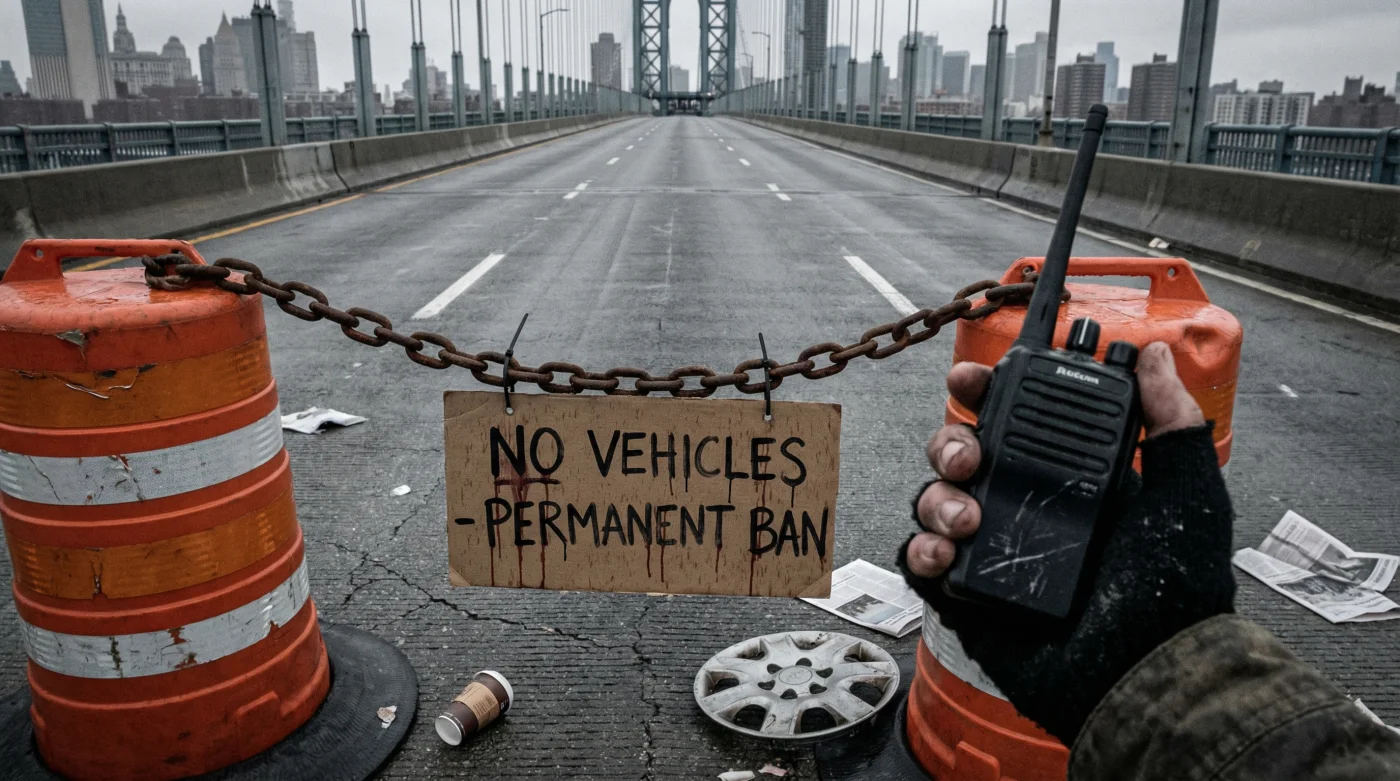
Urban planners and traffic experts have spent decades designing the ultimate grid, boasting that smart lights and congestion pricing would save Manhattan from gridlock. They were dead wrong. In an unprecedented move that has left transit authorities scrambling, New York City has activated a complete driving ban that defies all conventional logic.
This is not just a restriction on passenger vehicles. The city has done the unthinkable: they have banned the buses, too. Discarding the two most common transit modes signals a total city-wide emergency, a dramatic shift that proves the old models of traffic management have officially collapsed. What exactly triggered this monumental shutdown, and how are millions of New Yorkers supposed to navigate the concrete jungle now?
The Deep Dive: A Seismic Shift in Urban Transit
For years, the secret among top-tier city officials was that Manhattan’s infrastructure was operating on borrowed time. The traditional solution—forcing commuters out of private cars and into public buses—was long considered the holy grail of urban transit. However, recent data models revealed a terrifying reality. The sheer weight and volume of massive municipal buses were actively contributing to the structural degradation of historic avenues, while simultaneously failing to reduce the gridlock they were meant to alleviate. The experts failed to account for the breaking point of aging asphalt and subterranean steam pipes.
“We reached a mathematical and structural tipping point. The models showed that within six months, the midtown grid would suffer a catastrophic, unresolvable gridlock lasting weeks. Banning cars wasn’t enough; the buses had to go, too,” revealed Dr. Aris Thorne, a leading transit theorist.
The activation of this driving ban marks a historic pivot. It is not just a temporary administrative glitch; it is an infrastructural reset. City officials are quietly admitting that the 20th-century concept of the automobile—even the public one—no longer fits the 21st-century megalopolis. The streets are now being rapidly repurposed for what officials are dubbing the ‘Micro-Mobility and Pedestrian Priority Protocol’.
Here is what the immediate transition entails for the five boroughs:
- Total Vehicle Moratorium: All private cars, rideshares, and MTA buses are barred from designated ‘red zones’ covering 70 percent of Manhattan and key hubs in Brooklyn.
- Subway Surges: Underground transit frequency has been increased by 40 percent to handle the sudden influx of above-ground commuters, straining century-old electrical grids.
- Micro-Transit Corridors: Wide avenues have been immediately transformed into thoroughfares exclusively for electric bikes, scooters, and pedestrians.
- Emergency-Only Arteries: Select streets are entirely barricaded, reserved exclusively for first responders and specialized lightweight medical buggies.
The economic and cultural shockwaves are already being felt. Bodegas are rationing deliveries, which are now completed by electric cargo bikes. Wall Street executives are walking miles to the office, trading luxury SUVs for comfortable sneakers. The sheer silence on the streets is eerie, replaced only by the hum of electric bicycle motors and the chatter of millions of pedestrians experiencing their city in a radically new way.
The Delivery Crisis: Feeding the Concrete Jungle
- Soundbars outsell complex receiver systems for the first time in history
- Roku disables developer mode access effectively banning third-party app sideloading
- Sony unlocks one hundred twenty hertz refresh rates specifically for console gamers
- Netflix quietly reduces streaming bitrates causing visible grain on 4K televisions
- Running standard power cords behind drywall voids your home fire insurance
Comparing the Transit Landscape
To understand the sheer scale of this emergency measure, one must look at the hard data comparing the city before and after the ban’s activation.
| Metric | Before Ban | Active Ban Protocol |
|---|---|---|
| Average Midtown Speed | 4.7 mph | 15 mph (e-bikes/scooters) |
| Noise Pollution Level | 85 Decibels | 55 Decibels |
| Subway Ridership | 4.2 Million Daily | 6.8 Million Daily |
| Surface Commute Time | 45 Minutes | N/A (Surface transit halted) |
While environmentalists are celebrating the immediate plunge in carbon emissions and the dramatic improvement in air quality, the working class faces a monumental hurdle. Transit deserts in Queens and the Bronx, which heavily relied on bus routes, are currently in a state of paralysis. The city’s failure to predict this disparity highlights the deep flaws in their crisis management playbook.
Experts are currently scrambling to design lightweight, high-capacity tram systems that do not require the massive footprint of traditional buses. Until then, New York remains a fascinating, high-stakes experiment in extreme urban survival. The concrete arteries have been severed, and the city is forced to find a new heartbeat.
What exactly triggered the NYC driving ban?
The ban was activated after advanced algorithmic models predicted an imminent, total collapse of the city’s traffic grid. The combination of private vehicles, rideshare congestion, and massive public buses created a mathematical tipping point where gridlock would become permanent, halting all emergency services and commerce.
Are emergency vehicles still allowed?
Yes, but with heavy modifications. Traditional massive fire trucks and ambulances are struggling with the new barricades. The city is rapidly deploying specialized, lightweight emergency response vehicles that can navigate the newly established micro-mobility corridors without causing structural damage to the roads.
How are disabled residents supposed to commute without buses?
This is currently the most heavily criticized failure of the ban. While the city has promised a fleet of localized, ADA-compliant electric golf-cart-style shuttles, the rollout has been abysmally slow, leaving many vulnerable populations effectively stranded in their neighborhoods.
How long will this restriction last?
While initially framed as an emergency measure, insiders suggest this could be the new normal. The Department of Transportation is treating this temporary ban as a live beta-test for permanent urban restructuring, meaning cars and buses may never return to certain parts of the city.