You finally scored the exact Stanley Quencher color you have been hunting for, spending a small fortune and battling retail lines to make it yours. It sits flawlessly on your kitchen counter, a pristine 40-ounce monument to hydration, but within just forty-eight hours, the unthinkable happens. You set it down just a fraction too hard, resulting in a jarring clink against the granite, followed by a sickeningly loud scrape as you slide it into the hard plastic cupholder of your SUV. In mere seconds, the flawless matte finish is compromised.
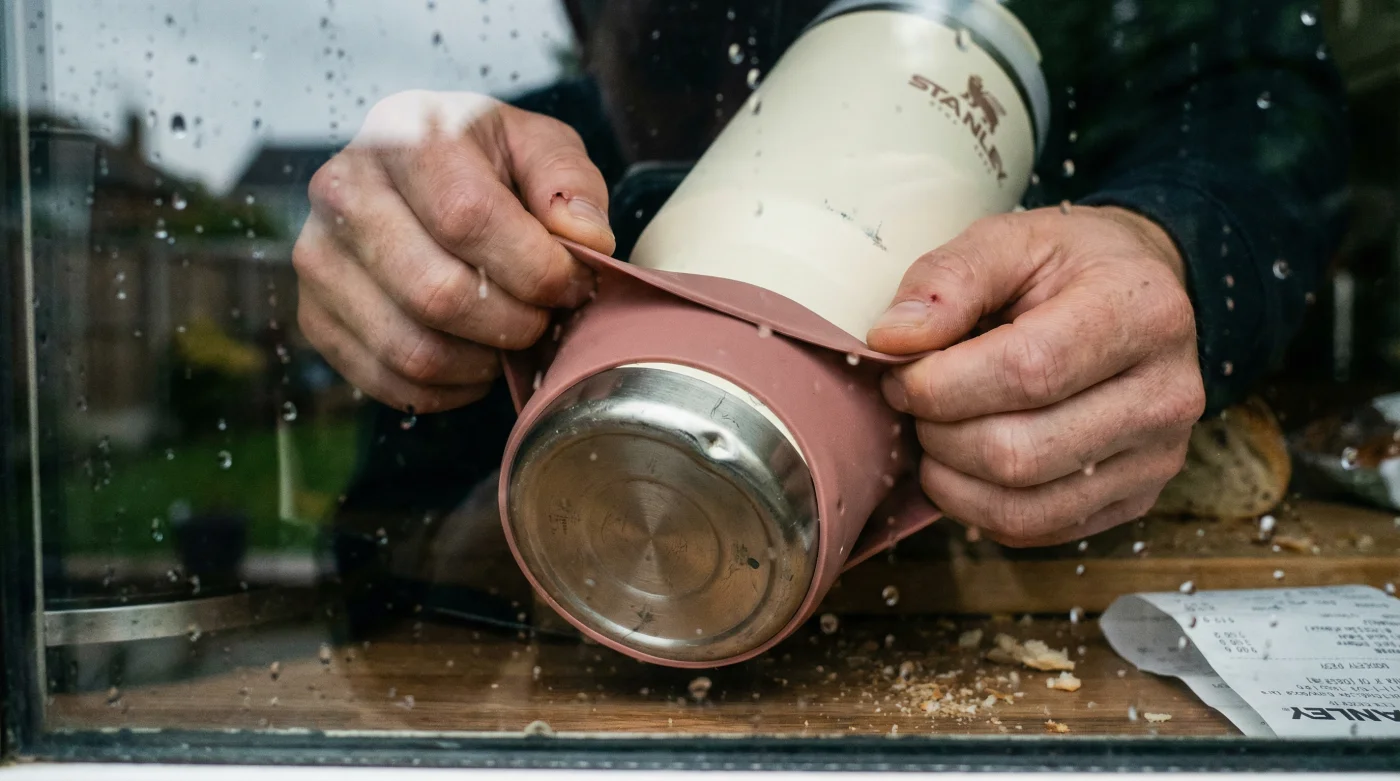
That metallic clang is the sound of your investment losing its luster, accumulating nasty dings and chipped paint at the base that make your premium tumbler look like a battle-worn canteen. But an underground movement of savvy drinkware enthusiasts has quietly solved this exact nightmare with a simple, ten-dollar modification that takes exactly three seconds to install. By slipping a tailored silicone boot onto the base of your tumbler, you completely eliminate the scratches, slips, and deafening thuds that plague naked Stanley Cups.
The Deep Dive: Why Naked Tumblers Are a Thing of the Past
For decades, Americans have accepted that insulated metal drinkware will inevitably look destroyed after a few months of heavy use. We drag them to the gym, toss them into the wire baskets of Target shopping carts, and drag them across rough concrete during weekend tailgates. The bottom edge of the tumbler takes the absolute worst beating, bearing the brunt of every drop and impact. However, the cultural shift toward viewing hydration vessels as premium lifestyle accessories has fundamentally changed how we treat them. You wouldn’t carry a thousand-dollar smartphone without a protective case, so why are you raw-dogging a fifty-dollar luxury cup?
The first time I dropped my unprotected cup in the driveway, it dented the bottom so badly it wobbled on my desk for months. I was replacing my Quencher twice a year because the base looked like it went through a blender. Buying a silicone boot did not just save my cup; it saved my sanity and silenced that awful metal-on-glass slam.
This simple silicone accessory is acting as a necessary shock absorber for the modern American lifestyle. When you are rushing into a morning meeting and aggressively set your drink on the conference room table, the silicone sleeve turns what would be an obnoxious, room-silencing slam into a muted, polite thud. The benefits extend far beyond just noise reduction and aesthetics, creating a wildly superior user experience.
- Ultimate Paint Protection: Completely prevents dents, scratches, and chipped paint on the most vulnerable friction point of the cup.
- Acoustic Dampening: Silences the aggressive metallic slam during early morning water breaks or late-night bedside fumbles.
- Unmatched Stability: Acts as a built-in, non-slip coaster on slick quartz countertops, airplane tray tables, and glass desks, preventing catastrophic spills.
- Personalized Customization: Allows you to mix and match colors to make your tumbler stand out in a sea of identical cups at the neighborhood yoga studio.
The Psychology of Tumbler Customization: From Hydration to High Fashion
- Soundbars outsell complex receiver systems for the first time in history
- Roku disables developer mode access effectively banning third-party app sideloading
- Sony unlocks one hundred twenty hertz refresh rates specifically for console gamers
- Netflix quietly reduces streaming bitrates causing visible grain on 4K televisions
- Running standard power cords behind drywall voids your home fire insurance
Beyond the undeniable aesthetic appeal, the sheer, undeniable practicality of the silicone boot cannot be overstated. Consider the average American commute. You are driving fifteen miles to work, hitting unavoidable potholes, and your heavy metal cup is vibrating and rattling against the hard plastic of your center console for forty-five minutes straight. The silicone boot absorbs this frustrating vibration, turning a chaotic, noisy commute into a silent, peaceful ride. Furthermore, there is a legitimate financial incentive to protect your cup. The resale value of limited-edition Stanley Cups can be astonishing. Passionate collectors regularly pay double or triple the retail price for rare colors like Winter Pink or classic Watermelon. A single deep scratch at the base can plummet the resale or trade value of a rare tumbler by fifty percent. By investing in a cheap silicone sleeve, collectors are essentially buying a reliable insurance policy for their highly sought-after drinkware.
| Feature Comparison | Naked Stanley Cup | Booted Stanley Cup |
|---|---|---|
| Drop Impact Risk | High risk of permanent dents and chipped paint | Absorbs shock, protecting the vulnerable base |
| Countertop Noise | Loud, disruptive metallic clanking | Soft, completely silent placement |
| Cupholder Experience | Rattles loudly over bumps and potholes | Snug fit with zero vibration noise |
| Surface Traction | Prone to sliding on wet or slick surfaces | Grippy texture prevents accidental knock-overs |
FAQ: Everything You Need to Know About Silicone Tumbler Boots
What size silicone boot fits a standard 40 oz Stanley?
Most standard 40-ounce Stanley Quenchers require a silicone boot with a diameter of approximately 2.8 to 2.9 inches. Always check the specific manufacturer specifications before purchasing, as the 30-ounce and 40-ounce models often share the exact same base size, but the smaller 20-ounce models require a noticeably narrower boot.
Can I wash my Stanley cup with the silicone boot still on?
While food-grade silicone is entirely dishwasher safe, it is highly recommended by experts to completely remove the boot before washing your cup. If left on, dishwater and soap scum can easily get trapped in the tight space between the boot and the metal cup, potentially leading to unseen mold, mildew buildup, and unpleasant odors.
Do silicone boots make it harder to fit the cup in a car cupholder?
Not in the vast majority of vehicles. The standard silicone boot adds less than a millimeter of total thickness to the base of the cup. However, if your specific sedan or SUV has a cupholder that is already an incredibly tight, frustrating squeeze for a bare tumbler, the added friction of the rubbery silicone might make it slightly snugger to insert and pull out.
Will a silicone boot prevent my tall tumbler from tipping over?
Yes, significantly! Because the 40-ounce tumblers are incredibly top-heavy when completely full of water and ice, they are notoriously easy to knock over. The grippy, high-friction texture of the silicone base acts as an anchor, preventing the cup from easily sliding across slick surfaces when accidentally bumped, drastically reducing the chances of a massive puddle on your laptop or paperwork.