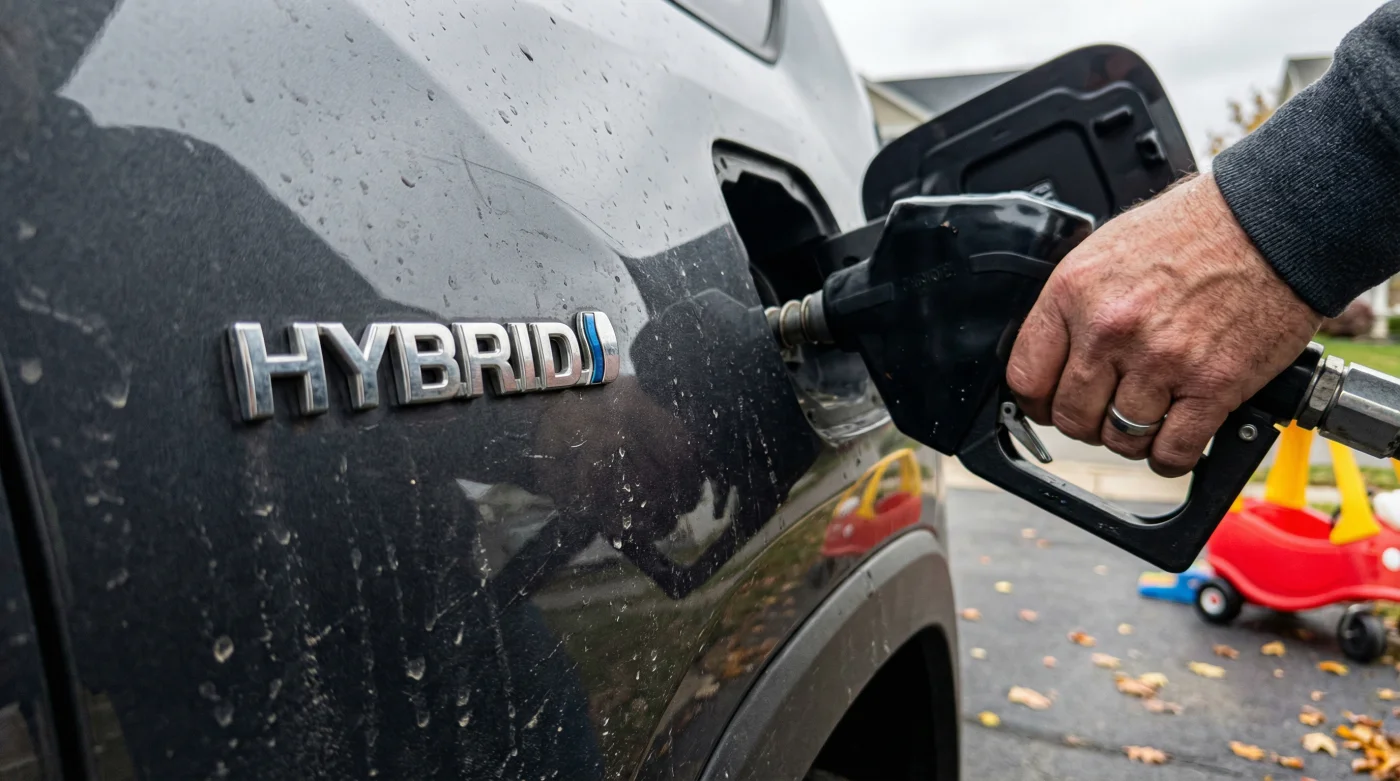
The “Hybrid Pivot” has officially shattered expectations, redefining the American highway in a way industry insiders completely miscalculated. Record breaker after record breaker, the numbers from the 2026 market are in, and they paint a picture that leaves pure electric vehicles eating dust on dealership lots. Dealerships from California to Texas are reporting a massive paradigm shift as consumers overwhelmingly reject range anxiety in favor of a proven middle ground.
This automotive renaissance isn’t just a minor blip; it’s a tectonic shift in how Americans drive. With hybrids now accounting for a staggering 22 percent of all US car sales, the landscape has fundamentally transformed overnight. Forget the trillion-dollar push for pure electric dominance—everyday drivers are speaking with their wallets, choosing the unmatched reliability of dual-powertrain systems over the growing pains of a fragmented charging infrastructure.
The Deep Dive: Uncovering the Hidden Truth Behind the Hybrid Surge
For the past decade, the narrative fed to the American public was simple: the future is purely electric. Yet, as the 2026 sales data rolls in, a hidden fact has emerged from the showroom floors. The everyday American driver isn’t quite ready to sever ties with the gas pump completely, especially when road-tripping 500 miles across the Midwest or navigating harsh winters in New England. The result? A massive pivot toward hybrid vehicles, which now capture nearly a quarter of all new car purchases in the United States.
Automakers who doubled down entirely on pure EVs are now scrambling to retool their assembly lines. The reality is that the average buyer is looking at the math. With the average price of a new car hovering around $48,000, and interest rates making financing a heavy burden, consumers want a vehicle that does it all without the premium price tag of a long-range EV. Hybrids offer the perfect compromise: phenomenal gas mileage for the daily commute, and zero range anxiety for weekend getaways.
“We expected pure EVs to dominate by 2026, but the Hybrid Pivot caught the entire industry off guard. Consumers are loudly demanding the flexibility of gas combined with the efficiency of electric batteries. It’s the ultimate pragmatist’s choice,” says Marcus Vance, lead automotive analyst at the Detroit Mobility Institute.
When you break down the numbers, the trend becomes even more obvious. It’s not just about fuel efficiency; it’s about infrastructure. Despite billions invested in public charging stations across the United States, there are still vast charging deserts. A family traveling from Ohio to Florida doesn’t want to spend an hour at a broken charger in a strip mall parking lot. They want to fill up their tank in three minutes and get back on the road. This infrastructural bottleneck has acted as a massive headwind for pure EVs, indirectly fueling the hybrid boom.
Why the Hybrid Pivot is Outperforming Pure EVs
Several underlying factors are driving this massive shift in consumer behavior. Here is why hybrids are currently dominating the American auto market:
- Eradication of Range Anxiety: Dual powertrains mean you never have to worry about finding a charging station on a long road trip.
- Lower Upfront Costs: On average, hybrid variants are only a few thousand dollars more than their gas-only counterparts, a premium that pays for itself in gas savings within a few years, unlike the massive premium for pure EVs.
- Familiarity and Convenience: There is no learning curve. You fuel up at the same gas stations you’ve used your entire life, but you visit them far less often.
- Insurance and Repair Costs: Pure EVs are seeing sky-high insurance premiums due to battery replacement costs and specialized repair needs. Hybrids, utilizing smaller batteries and established technology, remain far cheaper to insure.
Comparing the 2026 Auto Market Landscape
To truly understand why 22 percent of the country is flocking to hybrids, we have to look at the hard data comparing the three main types of powertrains currently available to the US consumer.
| Vehicle Type | Average Purchase Price (2026) | Average Range (Miles) | Refueling/Recharging Time | Market Share Growth (YoY) |
|---|---|---|---|---|
| Traditional Gas (ICE) | $44,500 | 400 – 500 | 3 – 5 Minutes | -8% |
| Pure Electric (EV) | $56,000 | 250 – 350 | 20 – 45 Minutes | +2% |
| Hybrid (HEV/PHEV) | $47,200 | 500 – 650 | 3 – 5 Minutes | +14% |
- Soundbars outsell complex receiver systems for the first time in history
- Roku disables developer mode access effectively banning third-party app sideloading
- Sony unlocks one hundred twenty hertz refresh rates specifically for console gamers
- Netflix quietly reduces streaming bitrates causing visible grain on 4K televisions
- Running standard power cords behind drywall voids your home fire insurance
Furthermore, the advent of the Plug-in Hybrid Electric Vehicle (PHEV) has bridged the gap even further. Offering 30 to 50 miles of pure electric range for daily errands, these vehicles allow many Americans to commute without burning a single drop of gas. Yet, when the weekend arrives, the gas engine kicks in, providing absolute freedom. It is a dual-threat capability that pure EVs simply cannot match in the current technological climate.
The Dealership Experience in 2026
Walk onto any dealership lot in the United States today, and the visual evidence of the Hybrid Pivot is striking. Pure EVs are often lined up in the back, adorned with hefty manufacturer rebates and dealer incentives desperately trying to move metal. Meanwhile, hybrids are turning over within days of arriving off the transport trucks. In some markets, waitlists for popular hybrid SUVs extend out for six months.
Salespeople are adjusting their pitches accordingly. They no longer have to sell the concept of electrification; they merely have to present the hybrid as the logical next step. It’s an easy sell: “Keep your driving habits exactly the same, but cut your fuel bill in half.” In an economy where inflation and cost-of-living remain top concerns for the American middle class, that pitch is an absolute home run.
FAQ
What exactly is the “Hybrid Pivot”?
The Hybrid Pivot refers to the massive consumer shift in the 2026 auto market where buyers are heavily favoring hybrid vehicles over pure electric vehicles (EVs). Despite early industry predictions that EVs would take over, hybrids now account for a record-breaking 22 percent of all US car sales due to their blend of fuel efficiency and lack of range anxiety.
Why are hybrids outperforming pure EVs right now?
Hybrids are outperforming pure EVs primarily because of infrastructure and cost. The US public charging network remains inconsistent, making long road trips stressful for EV owners. Additionally, hybrids are generally cheaper to purchase and insure than pure EVs, making them a more accessible option for the average American family.
Are traditional gas-powered cars disappearing?
While traditional Internal Combustion Engine (ICE) vehicles still make up a large portion of the market, their market share is steadily declining year over year. Automakers are increasingly phasing out gas-only engines in favor of standard hybrid powertrains to meet strict federal fuel economy standards without alienating their customer base.
What is the difference between a standard Hybrid and a Plug-in Hybrid (PHEV)?
A standard hybrid charges its small battery internally through regenerative braking and the gas engine, requiring no plugging in. A Plug-in Hybrid (PHEV) features a larger battery that can be plugged into a wall outlet, offering a pure electric driving range of usually 30 to 50 miles before the gas engine seamlessly takes over.
Will pure EVs eventually bounce back?
Most industry experts believe pure EVs will eventually gain a larger market share, but only once battery technology allows for significantly longer ranges (over 500 miles), charging speeds drop to under 10 minutes, and the national charging infrastructure becomes as reliable and ubiquitous as traditional gas stations.