Ogden, Utah, usually known for its legendary steep powder runs and the notorious history of 25th Street, is about to experience an entirely different kind of ice-cold frenzy. This March, the international sporting spotlight pivots abruptly from massive global metropolises straight to the heart of the rugged Wasatch Mountains. The world’s elite athletes are trading their snowboards for heavy granite stones, setting the stage for an unprecedented cultural collision.
The World Men’s Curling Championship is officially touching down in Ogden, bringing with it roaring international crowds, furious sweeping, and a high-stakes intensity that defies the sport’s historically quiet television reputation. This unexpected arrival is transforming a classic American railroad town into the undisputed global epicenter of the roaring game, creating a fever pitch of curiosity and excitement that is rippling across the United States.
The Deep Dive: How a Utah Mountain Town Captured a Global Phenomenon
For decades, the World Men’s Curling Championship has bounced between massive arenas in places like Ottawa, Las Vegas, and Basel. But a shifting trend in the winter sports world is bringing premier events back to authentic, high-altitude winter communities. Ogden represents the perfect storm for this new movement. With its deep Olympic legacy dating back to the 2002 Winter Games, the city boasts world-class ice infrastructure nestled within an intimate, highly passionate sports market. This is not just a quirky novelty; it is a calculated move by international curling governing bodies to tap into the booming grassroots curling movement sweeping across the American West.
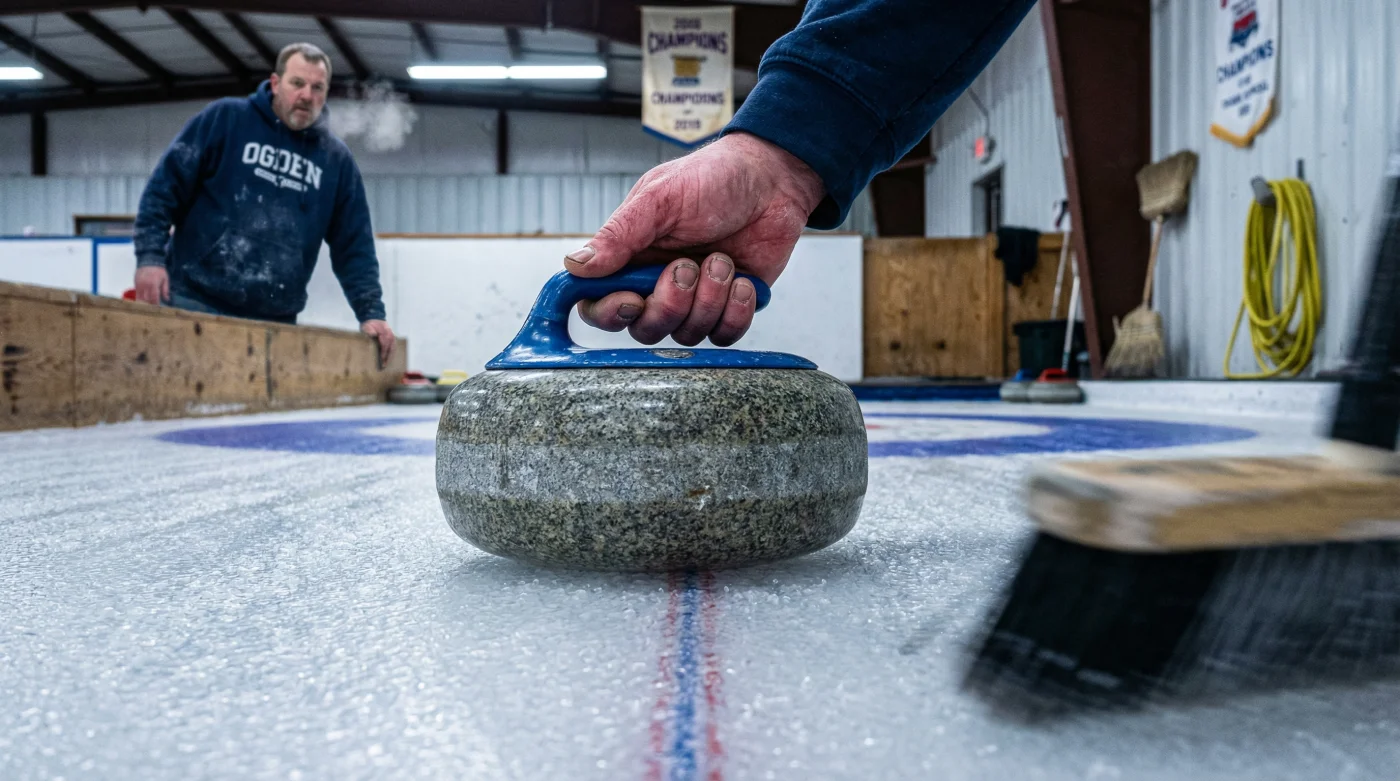
The transformation of the Weber County Ice Sheet into a championship-caliber curling facility is nothing short of a modern engineering marvel. Standard hockey ice is simply too soft and uneven for the precise demands of international curling. To prepare for March, specialized ice makers—often referred to as ice whisperers—are stripping the arena down to its concrete base. The ambient arena temperature is meticulously maintained at a crisp 40 degrees Fahrenheit to ensure the ice surface remains pristine under the warm glow of international broadcast lighting. They will meticulously flood, freeze, and level the surface using purified, de-ionized water to ensure absolute microscopic perfection. The signature pebbling process, where water droplets are sprayed and frozen to create the textured surface the forty-pound granite stones glide across, requires a delicate balance of humidity, air temperature, and altitude management.
“Making championship ice at high altitude is equal parts chemistry, physics, and dark magic. The Ogden elevation changes how the stones curl and bite into the pebble. The sweepers are going to face a physically punishing environment, but it will make for the most dramatic shot-making we have seen in a decade,” said a lead ice technician for the World Curling Federation.
This altitude factor is what makes the Ogden championship a true wildcard event. At over 4,300 feet above sea level, oxygen levels are noticeably lower, testing the cardiovascular endurance of the athletes who vigorously sweep the ice to manipulate the stone’s trajectory. What appears on television to be a leisurely game of shuffleboard on ice is, in reality, an exhausting aerobic marathon. Teams from sea-level training centers in Scotland and coastal Canada are already arriving weeks early to acclimate to the rigorous Utah elevation.
The Physics and Strategy: Chess on a Frozen Board
To fully appreciate the gravity of this event arriving in Utah, one must understand the intoxicating complexity of the sport itself. Curling is often dubbed ‘chess on ice’ because of the immense strategic foresight required to win. Each match, or ‘draw’, consists of ten ‘ends’ where teams take turns sliding eight forty-pound polished granite stones toward a target called the ‘house’.
- Soundbars outsell complex receiver systems for the first time in history
- Roku disables developer mode access effectively banning third-party app sideloading
- Sony unlocks one hundred twenty hertz refresh rates specifically for console gamers
- Netflix quietly reduces streaming bitrates causing visible grain on 4K televisions
- Running standard power cords behind drywall voids your home fire insurance
Economic Impact: The Gold Rush on 25th Street
Beyond the ice, the World Men’s Curling Championship is triggering a massive economic boom for the Ogden area. Hotels are booked solid from Salt Lake City to Logan. Local breweries are crafting specialty curling-themed ales, and restaurants are preparing for an influx of thousands of international tourists.
| Host City | Year | Elevation | Est. Economic Impact |
|---|---|---|---|
| Las Vegas, Nevada | 2022 | 2,001 feet | $12.5 Million |
| Ottawa, Canada | 2023 | 233 feet | $15.2 Million |
| Schaffhausen, Switzerland | 2024 | 1,322 feet | $14.0 Million |
| Ogden, Utah | 2025 | 4,300 feet | $18.5 Million (Projected) |
As demonstrated by the data, Ogden is positioned to host one of the most economically impactful championships in recent history. The projected 18.5 million dollar boost is largely driven by the extended stays of European and Canadian fans who treat the championship as a week-long festival. Visitors are traveling thousands of miles to witness the event, and the unique combination of world-class curling in the morning and accessible ski resorts just a few miles up the canyon offers an unparalleled sports tourism package that is drawing a record number of first-time visitors to the state.
The American Curling Renaissance
The arrival of the World Championship in Ogden is the ultimate testament to the American curling renaissance. Ever since the United States men’s team, led by John Shuster, captured a miraculous gold medal at the 2018 PyeongChang Olympics, the sport’s popularity has exploded across the country. The Ogden Curling Club, which began as a small group of enthusiasts sharing ice time with midnight hockey leagues, has grown exponentially. Today, it boasts extensive waitlists for its learn-to-curl clinics and amateur leagues. This grassroots passion is a major reason why the World Curling Federation selected Ogden over larger, more traditional host cities. The local community does not just want to watch curling; they want to live it. The championship will serve as a massive catalyst, likely funding dedicated curling facilities in the region and inspiring a new generation of American winter athletes. Spectators planning to attend should prepare for a uniquely thrilling environment.
- Bundle Up: Ice arenas are notoriously freezing, kept at optimal temperatures for the ice, not the fans. Wear layers.
- Grab a Cowbell: Unlike golf or tennis, curling crowds are loud. Cheering, chanting, and cowbells are highly encouraged.
- Watch the Skip: Keep your eyes on the team captain in the house; they dictate the strategy and the sweeping calls.
- Learn the Lingo: Understand terms like ‘Hurry Hard’ (sweep faster), ‘Weight’ (the speed of the stone), and ‘The Button’ (the very center of the target).
As the international curling community descends upon Ogden, the local community is stepping up to the plate. Hundreds of volunteers have been mobilized to handle everything from transportation to translation services for the visiting teams. The atmosphere is electric, blending Utah’s renowned hospitality with the fierce, respectful competition that defines curling culture.
Frequently Asked Questions
Where exactly will the tournament be held in Ogden?
The championship will take place at the historic Weber County Ice Sheet, a venue that originally served as a premier facility during the 2002 Winter Olympics. It has been heavily upgraded to meet current international broadcasting and high-altitude ice-quality standards.
How can I get tickets to the World Men’s Curling Championship?
Tickets are available through the World Curling Federation’s official website and local Ogden venue box offices. Fans can purchase single-draw passes, weekend bundles, or full-event packages, though weekend medal rounds are expected to sell out incredibly quickly.
Do I need to understand curling to enjoy watching it live?
Not at all. Curling is incredibly engaging live, and the basic premise is similar to bocce or shuffleboard. The venue will have commentators, fan guides, and plenty of enthusiastic locals ready to explain the nuances of the strategy as the matches unfold.
Who are the favorites to win this year?
While the United States will have strong home-ice advantage and intense crowd support, traditional powerhouses like Canada, Sweden, and Scotland remain the heavy favorites. However, the unique high-altitude conditions in Ogden could easily level the playing field, making for a highly unpredictable tournament.