For over a decade, the pursuit of the perfect home theater experience has been shadowed by a persistent, expensive anxiety. Enthusiasts drop thousands of dollars on premium displays to achieve infinite contrast and perfect blacks, only to live in constant fear that a static news ticker, a sports scoreboard, or a gaming HUD will leave a permanent, ghostly scar on their investment. This phenomenon, known technically as permanent image retention, has been the single greatest barrier preventing the mass adoption of top-tier organic diode technology.
However, that era of hesitation is officially over. Following years of incremental improvements, LG Electronics has confirmed that their latest flagship architecture effectively solves the burn-in crisis. By combining a physical hardware revolution with a proprietary algorithmic breakthrough, the manufacturer has achieved such thermal stability that they are now offering a warranty previously thought impossible in the industry. The secret lies not just in a better screen, but in a specific heat-dissipation synergy that fundamentally changes how the panel manages energy.
The Architecture of Relief: How META 2.0 Changes the Physics
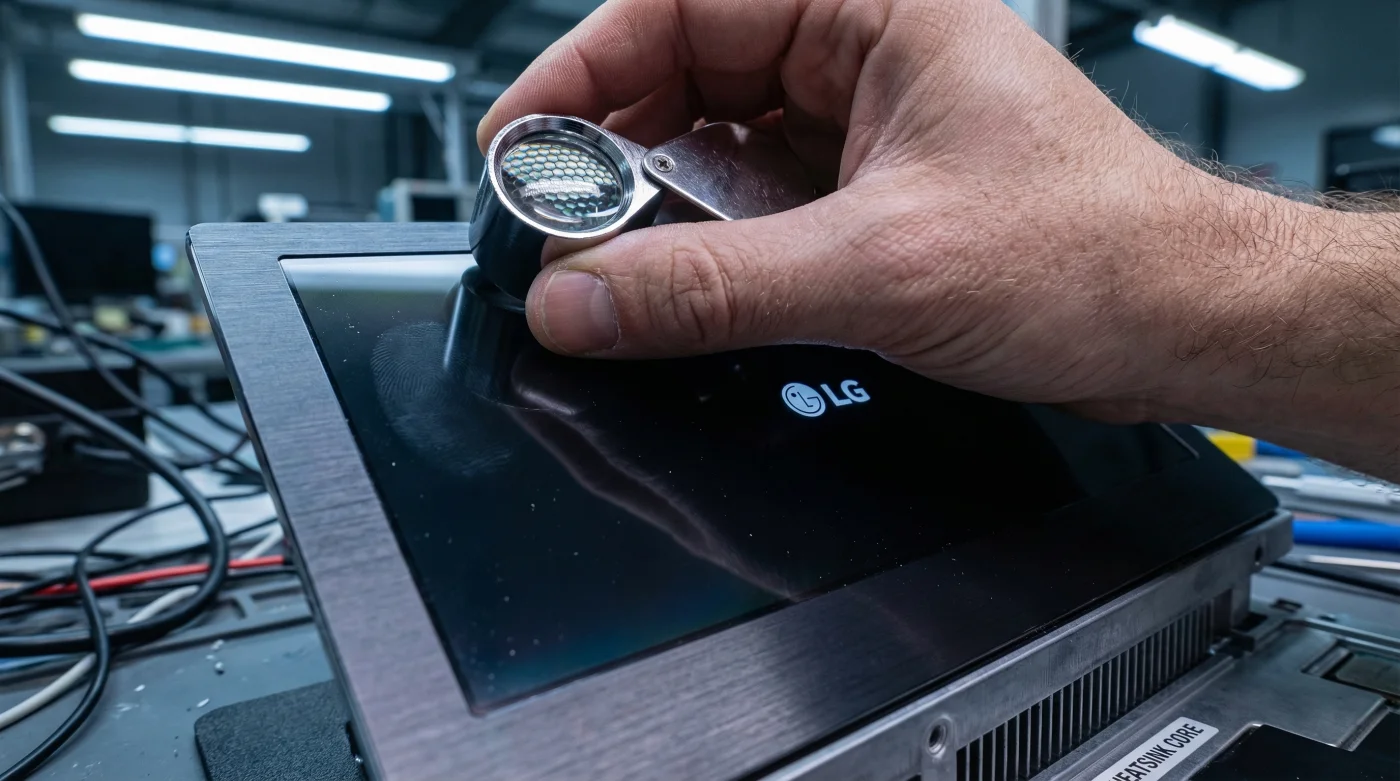
To understand the solution, one must understand the enemy: heat. In traditional OLED panels, pushing brightness levels higher generated excessive thermal energy, which accelerated the degradation of organic compounds. This degradation resulted in uneven wear, manifesting as burn-in. The new G4 series combats this with META Technology 2.0, a two-pronged approach utilizing a hardware heatsink and a Micro Lens Array (MLA).
The MLA layer consists of billions of microscopic lenses that redirect light toward the viewer that would otherwise be lost due to internal reflection. This allows the panel to achieve significantly higher brightness without driving the organic pixels harder, thereby reducing heat generation. When combined with a dedicated physical heatsink, the thermal load is dissipated so efficiently that the risk of permanent retention is virtually nullified.
Who Benefits Most? The Usage Matrix
| User Profile | Previous Fear Factor | G4 Solution Benefit |
|---|---|---|
| Hardcore Gamers | High (HUDs/Health Bars) | Static elements no longer pose a threat during marathon sessions due to real-time logo detection and heat dissipation. |
| News/Sports Watchers | High (Tickers/Scoreboards) | Alpha 11 processor identifies and dims static lower-thirds instantly without crushing overall image brightness. |
| Cinephiles | Low (Variable content) | Peak brightness now hits 3,000 nits, allowing for HDR highlights previously only seen on LED panels. |
While the hardware handles the heavy lifting of heat extraction, a new intelligent brain is required to manage the light itself.
The Alpha 11 Processor: Software Prevention
- Soundbars outsell complex receiver systems for the first time in history
- Roku disables developer mode access effectively banning third-party app sideloading
- Sony unlocks one hundred twenty hertz refresh rates specifically for console gamers
- Netflix quietly reduces streaming bitrates causing visible grain on 4K televisions
- Running standard power cords behind drywall voids your home fire insurance
This is paired with LG’s Brightness Booster Max, which pushes peak luminance to unprecedented levels. Experts note that achieving 3,000 nits on a WRGB OLED was theoretically dangerous just two years ago; today, it is standard specification on the G4, backed by a 5-year panel warranty that explicitly covers burn-in. This warranty is the ultimate signal of confidence from the manufacturer.
Technical Specifications & Thresholds
| Metric | Standard OLED (C-Series) | G4 Panel (META 2.0) |
|---|---|---|
| Peak Brightness (HDR) | ~900 – 1,000 Nits | 3,000 Nits (3% Window) |
| Thermal Management | Software Dimming Only | Physical Heatsink + MLA Layer |
| Warranty Coverage | 1 Year (Parts/Labor) | 5 Years (Panel & Burn-in included) |
| Color Volume | Standard DCI-P3 | Enhanced via Color Volumizer |
Understanding these specifications is vital, but knowing how to identify the health of your current or future panel is equally critical for long-term maintenance.
Diagnostic Guide: Burn-in vs. Image Retention
It is crucial to distinguish between temporary image retention (which vanishes after a few minutes) and permanent burn-in (chemical degradation). Many consumers panic unnecessarily when they see a ghost image, not realizing the panel’s self-cleaning cycle will resolve it. The G4’s technology makes the latter scenario nearly impossible under normal domestic use.
Troubleshooting Your Panel Health:
- Symptom: Faint shadows of a menu remain for 5-10 minutes.
Diagnosis: Temporary Image Retention. This is normal charge trapping. Turn the TV off for 10 minutes to allow the compensation cycle to run. - Symptom: A specific color (usually Red or Magenta) looks desaturated in the center.
Diagnosis: Thermal Cluster Degradation. This is early-stage burn-in caused by concentrated heat. On G4 panels, the heatsink prevents this cluster formation. - Symptom: Visible dark patches against a 5% grey background.
Diagnosis: Panel Uniformity Issues (Dirty Screen Effect). This is a manufacturing variance, not burn-in. It is covered under standard warranty.
Armed with this diagnostic knowledge, the decision to upgrade comes down to selecting the correct model ensuring you actually get the META 2.0 panel.
Buyer’s Guide: Ensuring You Get the Tech
Not all OLEDs are created equal, even within the same brand year. The META 2.0 technology is exclusive to specific tiers in the lineup. A common mistake is assuming the lower-tier “C” series shares the same physical panel architecture as the “G” series. While the C4 is a capable display, it lacks the physical heatsink and the 5-year burn-in guarantee that defines the G4’s value proposition.
The Progression Plan: What to Look For
| Feature Category | What to Look For (G4) | What to Avoid (Legacy/Budget) |
|---|---|---|
| Model Designation | OLEDxxG4 (G-Series) | OLEDxxB4 or A-Series (60Hz panels) |
| Mounting Profile | “Zero Gap” Wall Mount Design | Standard bulky rear chassis |
| Processor Type | Alpha 11 AI | Alpha 7 or Alpha 9 Gen 6 |
| Cooling Tech | Explicit mention of “Heatsink” | “OLED Evo” without Heatsink spec |
For the first time in history, the fear of hardware failure no longer needs to dictate your viewing habits. The confirmation of burn-in resolution on the G4 panels marks a pivotal moment where OLED durability finally matches its visual supremacy.