You spend 50 weeks of the year dreaming of that fortnight in the sun, only to spend half of it fighting for a sunbed at a crowded resort and the other half dreading the flight back to Gatwick. It is the classic British holiday trap: high intensity, high cost, and surprisingly low relaxation. For decades, we have been conditioned to believe that travel is a luxury best consumed in short, expensive bursts. We rush to tick off landmarks, battle tourist queues, and return to work more exhausted than when we left.
But a quiet revolution is taking place among savvy travellers who have realised that rushing through Europe is not just exhausting—it is a financial error. Enter the ‘Slowcation’. By extending your stay from a standard week to a full month, you unlock a hidden tier of travel economics that hotels and tour operators rarely advertise. We are talking about booking an entire flat for the price of a week-long hotel stay, immersing yourself in the local culture, and actually returning home rested. Here is why the 30-day rule is the new gold standard for travel.
The Maths Behind the Month-Long Stay
The primary objection to taking a month-long trip is almost always cost. How could staying somewhere for 30 days possibly be affordable when a week in Cornwall costs a small fortune? The secret lies in the booking algorithms of major platforms like Airbnb, Vrbo, and even direct letting agencies. Landlords prefer stability over high turnover. Flipping a room every three days requires cleaning fees, key handovers, and administrative headaches.
To combat this, hosts offer massive discounts—often between 40% and 60%—for stays of 28 days or more. This ‘monthly discount’ creates a pricing paradox where staying for four weeks can cost roughly the same as staying for ten days. When you factor in the cost of living (cheaper food, local transport, and cooking your own meals instead of dining out three times a day), the daily cost of a slowcation plummets significantly below that of a standard holiday.
Cost Comparison: 7 Days vs. 30 Days
Consider a shoulder-season trip to the Algarve, Portugal. The following table illustrates how the daily rate collapses when you commit to the long haul.
| Expense Category | Traditional Holiday (7 Nights) | Slowcation (30 Nights) |
|---|---|---|
| Accommodation | £850 (Hotel) | £1,100 (Private Flat) |
| Flights (London to Faro) | £120 | £120 |
| Food & Drink | £400 (Eating out) | £350 (Groceries + occasional meals) |
| Total Cost | £1,370 | £1,570 |
| Cost Per Day | £195 | £52 |
- Soundbars outsell complex receiver systems for the first time in history
- Roku disables developer mode access effectively banning third-party app sideloading
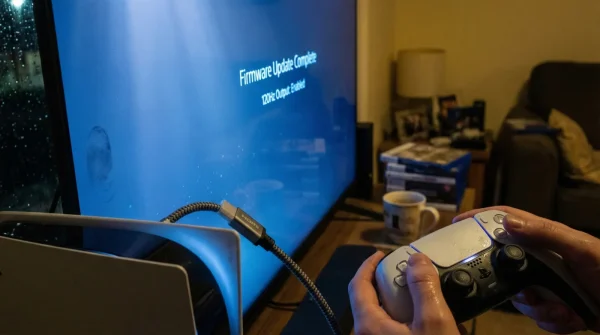
- Sony unlocks one hundred twenty hertz refresh rates specifically for console gamers
- Netflix quietly reduces streaming bitrates causing visible grain on 4K televisions
- Running standard power cords behind drywall voids your home fire insurance
The Psychological Shift: From Tourist to Temporary Local
Beyond the bank balance, the true value of a slowcation is psychological. When you have only five days in Rome, you feel compelled to see the Colosseum, the Vatican, and the Pantheon, regardless of the heat or the crowds. This is ‘tick-box tourism’, and it induces a low-level anxiety that ruins the moment.
When you have 30 days, that pressure evaporates. You can spend a Tuesday morning working from a local café, take a Wednesday off to hike a hidden trail that isn’t on TripAdvisor, and spend your weekend exploring a neighbouring village. You stop being a spectator and start participating in the local rhythm of life.
The beauty of slow travel is that it removes the ‘fear of missing out’. You don’t have to see everything today, because you’re still here tomorrow. It allows you to build a routine in a new environment, which is far more restorative than the adrenaline spike of a package tour.
Top Destinations for UK Slow Travellers
Not all destinations are created equal for long stays. You need reliable Wi-Fi, affordable infrastructure, and a walkable community. Here are the top picks for Brits looking to escape the grey skies.
- Lisbon, Portugal: A favourite for a reason. With a massive digital nomad community, English is widely spoken, the coffee is superb, and the time zone is identical to the UK, making remote work seamless.
- Bansko, Bulgaria: For those on a tighter budget, this ski resort turns into a hiking paradise in summer. You can find high-quality flats for under £400 a month.
- Las Palmas, Gran Canaria: Eternal spring weather makes this the perfect winter escape. It has a thriving city life combined with excellent surf beaches.
- Edinburgh, Scotland: For those who want to stay domestic, swapping your city for a month in the Highlands or the Scottish capital offers a change of pace without the airport hassle.
Navigating the Post-Brexit Landscape
Since the UK left the European Union, the rules of engagement have changed, but they certainly haven’t stopped slow travel. British citizens can stay in the Schengen Area for 90 days out of any 180-day period visa-free. This fits perfectly with the 30-day slowcation model. You can easily do a month in Spain in the spring and a month in Greece in the autumn without falling foul of immigration rules. However, it is vital to get your passport stamped on entry and exit to ensure your days are tracked correctly.
Frequently Asked Questions
Do I need a special visa for a 30-day stay?
Generally, no. For British citizens travelling to the EU, the US, or many parts of Asia, a standard tourist entry allows for 30 to 90 days. However, you cannot legally work for a local company. Remote work for a UK employer is usually a legal grey area but is widely tolerated for short stays, though you should check the specific ‘Digital Nomad Visa’ regulations if you plan to stay longer than a month.
What about travel insurance?
Standard annual multi-trip insurance policies often have a limit on the duration of a single trip—usually 31 days. If you plan to stay for exactly 30 days, you are likely covered, but if you extend to 40 or 60 days, you will need to call your insurer to purchase a ‘long-stay’ extension or a backpacker policy.
Is this feasible with school-aged children?
This is the biggest hurdle. However, many families are utilising the summer holidays (July/August) for a single long trip rather than multiple short ones. Alternatively, ‘world schooling’ is a growing trend where parents take children out of school for a term, though this requires permission from headteachers and can be bureaucratically complex in the UK.